Articles by "Logistics"
Showing posts with label Logistics. Show all posts


The United States auto industry has been producing and creating more cost-efficient electric cars since the 1970’s. Companies such as Tesla and Nissan are the pioneers in this type of technology and now have competition from other world automakers. The demand continues to increase for more sustainable consumer products. However, one sector that is often overlooked is the electric truck freight automotive. Despite the lack of popularity and visibility compared to consumer automobiles, the fright and semi-truck business is quite crucial for the logistics of goods both in the U.S. and abroad. As governments and corporations find new ways to reduce carbon emissions, the supply chain infrastructure offers a perfect opportunity to reduce carbon emissions. 

Freight truck emissions are one of the more substantial carbon emitters in the world with an estimated 1.8 billion tons of CO2 released into the atmosphere in 2019* (62% of all cargo freight emissions). One of the easier ways that business could decarbonize their supply network distribution is to invest in electric trucks and freights.

The cost-effectiveness of Electric freight trucks.

One of the important aspects in the push for a greener supply chain is making ensure “greener” provides a cost-effective solution. The cost analysis of operating a transport truck is based on several factors: 

Electric Freight trucks are still more expensive to purchase upfront than their diesel counterparts due to the high battery costs. 

According to Forbes, A 375-mile range truck with the current battery price of $135/kWh is expected to cost as much as 75% more than a diesel counterpart. 

In terms of cost per mile efficiency the electric trucks already seem to be a substantial cost-effective option.

“A Class 8 electric truck—the heaviest long-haul trucks, weighing more than 33,000 pounds -traveling an average of 300 miles a day would cost 13% less to own per mile than a conventional diesel truck” (Forbes). 

Electric costs are based upon electricity demand; the cost of fueling can be substantially cheaper by charging during off demand hours. 

There is a lower maintenance cost because the electric engines have fewer moving parts and thus receive less wear and tear than a normal diesel engine. 

A study of the Argonne National Laboratory shows that maintenance costs are 40% cheaper for Electric Vehicles (EV’s) than Internal engine combustion (ICE) vehicles.  

Total Cost of Ownership (TCO) – some additional factors:

Depreciation

Tax benefits

Insurance 

The bottom line –This elevated initial investment makes most companies unwilling to switch their fleet, when considering that electric trucks do not have an efficient driving range compared to a diesel truck. For reference a normal diesel semi-truck can drive 2,100 miles before having to refuel the tank**, compare this to an electric truck that at 375-miles needs to recharge. 

How Sustainable are Electric Vehicles?

The three main factors to consider: 

Electricity power matrix

Freight production emissions 

Battery waste management

One big caveat in the sustainable potential of this technology is the electric grid of the country where the freight trucks is being used. If the local energy matrix used to charge truck relies mostly from fossil fuels, then the carbon emission reduction becomes less expressive. 

The EPA points out Electric Vehicles (EV’s) are comparably better than fossil fuel engines since they have a 100% rate of carbon emission compared to the more reliant fossil fuel matrixes that use a high percentage but generally not 100% carbon emitting sources. The energy matrix across every country in the world is decarbonizing which makes EV’s a better sustainable solution in the long run. 

In addition, there is the issue of production; electric freight trucks can produce more carbon emissions in its production than normal trucks due to the energy intensive process require to produce the batteries in the first place. Overall, the total Green House Gas (GHG) emissions per lifetime for electric vehicles is lower than fossil fuel engines so it is a better option in the long run despite the short-term trade-off in increased carbon emissions. 

An outlying issue, yet to be addressed is the recycling of the EV batteries and the fossil fuel cars that are going to be replaced. For the solution to work diesel and gas automobiles will have to be reused or recycled. The solution for lower carbon emissions should not come at the trade-off creating another negative environmental externality.

Conclusion

In 2021, electric trucks are still in proof of concept, that has yet to be fully implemented. Additional research is needed to reduce electric battery cost and increase the mileage range per electric charge. There is potential for success in this environmentally friendly solution but it’s yet to prove to be economically feasible.

Companies should be on the lookout for improved electric truck technology, which will down the road create a greener supply chain.

If you have any questions about this blog post please email me at ppeebles@corcentric.com for information about our fleet procurement, fleet financing  and the GPO please click https://www.corcentric.com/fleet-solutions/.

Sources:

*According to our world in data

**According to Schneider National

 The movement of goods from one point to another is complex - the transportation industry is a blend of the networks, infrastructure, equipment, information technology, and employee’s necessary to transport a large variety of products safely and efficiently throughout the nation and around the world. Although generally considered separate transportation entities, trains, planes, ships and trucks are actually part of an integrated network.

With such varieties in how company’s ship their goods, its impossible for two organizations to have the exact same supply chain profile. For this reason, to compare data from one shipper to the next, it can cause misguided recommendations and expectations. Benchmarking data versus industry wide historical rates or against other shippers does not account for future trends and predictive modeling.

In the Big Data Era, companies in a variety of industries, including transportation, more acutely feel the need to collect information most relevant to their businesses. They want to find a way to make decisions based on accurate information at the right time. To achieve this, the development of systems that can transform the data collected information from which to generate actions that benefit the business directly.

Some of these benefits may be:

  • Identifying growth opportunities – internal and external data analysis can help to shape and forecasting business results, allowing identification of the most profitable growth opportunities, as well as some differentiators for business
  • Improving business performance – data analysis facilitates agile planning, forecasting more accurate budgeting and improved planning is an important tool for decision making
  • Better management of risk and regulatory requirements – data analysis allows improved reporting procedures, identification of risk areas such as compliance violation, fraud or reputation damage
  • Using emerging technologies – can identify new opportunities for obtaining information relevant to business management, based on new technologies

Very few companies use the full potential of predictive analysis. On the other hand, this approach often comes into conflict with trying to keep under control and lowering IT costs. Therefore, identifying and capitalizing on available information and identifying information sources that can support the generation of new opportunities have become the main challenge.

Effective integration of predictive analysis in business management has a measurable impact on performance because it allows better planning, weather clearer and more informed decisions, resulting in increased profits, reduce risk and increase business agility.

Using predictive analytics is useful transport companies to ensure that all relevant functions involved in the process so as to obtain an overview and to minimize information leakage. Information about consumers are a typical example in this respect: sales have billing addresses data and record transactions, marketing has information obtained from the analysis of feedback coming from consumers and the logistics department has details on concrete deliveries. All this information can sometimes double or vary from one department to another.

A coherent analysis of all these data can be a challenge, but an accurate analysis and enhanced business can generate added value. 

Stop living in the past and jump on the predictive analysis train…or truck…or ship.


During the first half of 2021, we have seen a record number of ransomware attacks with unprecedented impact across the economy. Before this new wave of attacks, hackers often limited their targets to large corporations and international businesses. Now, government agencies/public institutions and small/mid-sized businesses are the primary victims.

In this article, we will focus on the key actions a Procurement Department can take to prepare, prevent, respond, and recovery when it comes to ransomware attacks.

First, what is ransomware?

According to the U.S. Government’s Cybersecurity and Infrastructure Assurance Agency (CISA(opens in a new tab)): “Ransomware is an ever-evolving form of malware designed to encrypt files on a device, rendering any files and the systems that rely on them unusable. Malicious actors then demand ransom in exchange for decryption. Ransomware actors often target and threaten to sell or leak exfiltrated data or authentication information if the ransom is not paid.”

A few recent examples:

-        Colonial Pipeline: DarkSide, the company behind the attack, targeted
the billing system and internal business network of the Colonial Pipeline in the United States. The impact was widespread gasoline shortages in multiple states. The FBI covered a significant amount of the $4.4 million paid as ransom.

-        Brenntag: DarkSide also targeted Brenntag in a similar way, receiving a ransom payment of $4.4 million as well (not yet recovered.

-        CD Projekt Red: Attacked by HelloKitty hackers. The result was encrypted devices and threats of leaked source code.

Other companies that experienced a major hack:

-        Acer

-        JBS Foods

-        Quanta

-        National Basketball Association

-        AXA

-        CAN

-        Kia Motors


The methods hackers use are constantly becoming more complex and agile. Cybersecurity experts learn new ways to fight these threats each day. The most prevalent methods are 2-factor authentication, strong and effective firewalls/antivirus/anti-malware software, limited access to information for each employee, and routine backups.

What role can Procurement take in contributing to security success?

First, Procurement, Risk Management, and IT need to collaborate when onboarding strategic partners. The strategic sourcing process is integral in establishing the right tools and actions to protecting a company. We can break this down into 4 major sections. Each is in relation to vendor interactions, contractual requirements, and policies.

Prepare

Prevent

Respond

Recover

Prepare:

The safest way to prepare for a malware/ransomware attack is to assume it is inevitable. The security organization will more likely have an infrastructure in place to handle this. We should work this same mindset into our partner relationships.

Procurement is encouraged to require vendors to prepare for an attack in the same ways as their own organization. Partners can be mandated to routinely backup client data, have safeguards in place, and have a full redundancy plan in the event an attack occurs.

Prevent:

Procurement, Risk Management, and IT should collaborate on choosing the best IT Security Partner (or in-house solution) to prevent a malware/ransomware attack. When procurement facilitates strategic sourcing projects, they can effectively collect the requirements from across the company and ensure effective communication. Getting the right contract in place requires cross-team functionality. Procurement is best equipped to make this happen.

During supplier selection, an IT vendor assessment/questionnaire should be worked into an RFP. This assessment aims to test the partner’s cybersecurity strength and redundancies.

Respond:

Paying a ransomware attack is highly discouraged. Payments often influence “copycats” and more malicious behavior.

As this becomes more common, contracts with vendors should explicitly address how vendors should respond to ransomware attacks. The cost of the ransom and the cost of not paying should be compared. Contracts should aim to build every possible outcome and even stipulate who will be responsible for the actions taken and how those impacted will be made whole.

Recover:

Speaking of being made whole, procurement can foresee this by building in cybersecurity insurance requirements into each contract. This insurance is specific and often not included in general insurance requirements. Setting limits and requiring proof of insurance must become the standard moving forward. As seen before, some attacks could require millions of dollars in ransom, or even more when trying to recreate or deal with the ramifications of losing authentic data. Having financial protection against this is key for a company’s survival. Ensuring vendors can survive an attack is a key to business continuity.

In addition, when contracts ensure vendors/partners must back up and store data securely, recovery is much less costly and difficult for the clients. Procurement and Vendor Management can request vendors stress test their systems and practice for if/when an attack occurs.  


How a digital supply chain can help transform the future of logistics

The world is moving from physical to digital, from wasteful to sustainable, from delayed to instantaneous, and from manual to automated. This faster pace of commerce and the disruptions force us to re-think how we do business. As a result, this
innovation provides an opportunity in disruption. It creates fertile ground for innovation and partnerships that deliver new products, services, and business models to an industry that is in dire need of re-inventing itself to keep pace.

The future of logistics benefits from the data provided by multiple systems, advanced analytics, and the automation of intelligence. As information is provided through the many different sources, the digital supply chain connects technologies, assets, systems, and locations to enable real-time analysis, smarter decision making, and informed actions inside the supply chain.

The data provides predictive analytics that helps shape new strategies for transportation and logistics. It takes into account all variables inside the supply chain, as well as traffic, weather, and social trends, to create an accurate plan. It also allows for flexibility. For example, instead of creating monthly plans, strategies are set weekly or daily to meet inventory volatility and customer demand.

While this breaks the traditional steps between fixed processes, it opens the door for continuous improvement. It allows for better placement of inventory in warehouses that drives quicker order fulfillment. The data, connectivity, and analytics provides the foundation for automation and smart warehouses.

Robotics such as autonomous forklifts, transporters, and assembly line vehicles provide a safe, efficient, and reliable solution for the movement of goods in a warehouse, while improving productivity, visibility, and customer service levels.

Wearable technology gives managers and employees the capability to exchange data between devices and the network. Wearables support core processes such as shipping, receiving, routing, inventory management, picking, and replenishment.

Outside of the walls of warehouses and distribution centers, advanced vehicle technology that includes everything from in-cab systems to engine and trailer diagnostics, and from electric and hydrogen fuel systems to autonomy is transforming the supply chain. Connected trucks have the ability to provide a plethora of data that translates into business intelligence and key predictive analytics with the right people utilizing it.

Having all these pieces in place – technology, data, analytics, warehouse automation, advanced vehicles, and infrastructure – a connected digital supply chain can be adaptive and responsive to the demands of consumers. It gets products to assembly lines quicker and when needed. It strategically maps warehouses and distribution centers for inventory placement, and eliminates waste inside the supply chain. It drives accurate, efficient, and accelerated e-commerce fulfillment and last mile delivery.

The digital supply chain connects everyone involved from suppliers to the consumer. Products can be seen moving through the supply chain, fleets can maximize uptime, and consumers can better predict the delivery of their products they purchased. Companies can meet sustainability regulations, digitize records, and forecast better.

As most are aware, 2020 was a challenging year for everyone. While some businesses and industries were able to thrive, others needed to be creative in their ability to adapt and survive. One of the key takeaways from 2020 was how to prepare for drastic times and make sure if anything like 2020 happens again, we are all better prepared. 

Looking forward to 2021 within the Logistics Industry, you will see some of what we have come to expect stay the same. While in other areas, there will be change, most likely permanent change, that will affect the industry moving forward. Below you will find a few highlights and updates from the beginning of 2021 and looking to the rest of the year for both the Less-Than-Truckload and Full-Truckload markets. 

 LTL General Rate Increases:

Most carriers implement annual GRIs for noncontractual freight to absorb cost inflation, including driver and dockworker pay increases and ongoing investments in tech and real estate. In 2021, driver recruitment and retention expenses represent one of the biggest cost headwinds for carriers. Fuel expenses have moved higher as well, but separate surcharge mechanisms are in place to capture fluctuations.

So far early in 2021, the majority of the increases are in the 5% to 6% range, likely indicative of tightening LTL capacity and a rate-disciplined environment.

LTL Carrier Pricing Trend:

More carriers are getting better intelligence around what they are hauling and how it impacts their costs. This will continue to push freight not ideal for LTL, small shippers especially, away from a model of base rate/discount and into blanket rates, most likely from brokers.

This in turn, will drive more development of dynamic and dimension driven pricing around carrier blanket/broker programs. Some carriers are already going down this cube and density path.

Regardless of where your current freight model currently sits, the industry is continuing to evolve which makes strong relationships with your carriers a critical path to optimal LTL pricing. 

Update on the Purchase of UPS Freight:

Montreal-based TFI International Inc. has agreed to purchase UPS Freight for $800 million. About 90% of the acquired business will operate independently within TFI International’s LTL business segment under a new name, TForce Freight. UPS Freight’s dedicated truckload assets will merge into TFI’s truckload segment.

TForce Freight will continue to serve UPS’ ongoing LTL distribution needs, and UPS will continue to provide freight volumes and other services to TForce Freight after the transaction for a base term of five years. UPS Freight employees will go with the business to TFI.

Trucking Market for 2021

Up until two years ago, most companies have purchased a set amount of freight transportation via an annual bid process, and then modified that contract as needed as their freight demands increased or decreased. That changed in 2018, when capacity crunches and driver shortages took hold of the industry. Fast-forward to 2020, and the annual bid is once again proving useless as companies scramble to secure capacity at the right price and with the best possible terms. The market is going to go up and down, so trying to reap the benefits in each of these peaks or valleys just doesn’t make sense long-term.

Both shippers and providers have also come to realize that all freight isn’t the same, and that it shouldn’t be treated as such. For example, every company should have a portfolio of ways of interacting with the different carriers. If you have a lane that ships once every quarter, you’re not going to have the same relationship as a lane that has 20 loads a week or 10 loads a day.

Shippers and carriers are both recognizing the need to look at the entire network and all the different lanes that they’re trying to secure a relationship with. Then, they can decide what part of the continuum will work best—spot, dedicated or some form of contract in the middle

The future…

Many large companies have failed to invest much capital into the building and automating of robust transportation systems

That changed when the global pandemic came into view and began disrupting the world’s supply chains, making transportation much more than just a necessary evil. And while the pandemic as a whole has exacted a steep toll on human lives and livelihoods, it’s also pushed more organizations to rethink how they manage their logistics and freight operations.

Companies are realizing it’s a must to invest in technology and automate transportation-related processes. The automation of freight management should continue to grow over the next few years. Artificial intelligence will play a bigger role in this evolution by providing shipment visibility, exceptions management, and risk management tools that address issues like weather and traffic.

Whenever you can take a handwritten bill of lading, digitize it, and then report on it in a matter of seconds, it gives a shipper the best chance for a successful and efficient supply chain and logistics network. As these and other advancements become more prevalent in freight management, they’ll dramatically drive down the costs and improve efficiencies across the board.


If you have a fleet, you have a need for tires. With a limited life and a key component to driver safety, procuring tires wisely can make a big difference in the Total Cost of Ownership (TCO) of your fleet. Tire pricing is typically based on volume and negotiating discounts is difficult at best. So how do you control costs if you do not have a massive fleet? There are a few simple avenues that can help your company save time and money procuring tires.

As a fleet manager, or a procurement professional purchasing tires for your organization, there are a few upfront decisions to make. First, you must decide what tier of tires you are searching for. This is a loosely defined rating on quality, engineering, price point, and markup. Although slightly arbitrary, typically, a tier 1 tire has the backing of a large organization. They have built up a lot of trust to get to that level, so their product can be trusted. Tier 2 tires will typically be lower in quality, price, or markup, and so on for Tiers 3 and 4. Finally, will you want to buy direct or through a distributor? Both have their pros and cons. Distributors will mark up the price but may have better service options. OEM tires often are cheaper, but the manufacturer may not have locations to install the tires you purchase. Be sure to consider what is most important to you.

Now, on to how to procure them!

1.      GPO’s (Group Purchasing Organizations)

Perhaps the simplest way to get high quality tires for your fleet at a fair price is through a GPO. A Group Purchasing Organization leverages the buying power of many organizations by combining the spend of multiple fleets to negotiate better pricing. This can especially benefit small and mid-size fleets. With a lower volume, negotiating pricing is very difficult as the scales are tipped against you. With a GPO, many small and mid-size fleets are combined to tip the scale back to your side. The best part is the work is already complete. Simply signing up with the GPO warrants you all the benefits with none of the work. It is the easiest way to receive a quick win and can save your company a surprisingly large amount.

To put this in perspective, Corcentric has over 160 group purchasing programs. With an 800,000-unit fleet under management, the pricing within these GPO’s is much better than a small or mid-size fleet can obtain. Tires are just one of the programs that we offer. Many different maintenance parts and fleet related products, including fuel, can be purchased using this buying power. We also offer multiple tire brands. You can choose form Goodyear, Michelin, Continental, Bridgestone, and more! Whomever you choose, GPO’s are the quickest way to get immediate savings on your tire purchasing.

2.      Back-End Rebates

Another simple and effective way to save on tires is to negotiate back end rebates. A simple explanation is you spend so much with the supplier, you get a specified percentage back. The lower the spend figure and the higher the percentage rebate, the better the savings. Rebates may be difficult if you do not have a large enough fleet. However, if you do not have a large enough fleet, you should be purchasing through a GPO like we spoke about earlier.

3.      Maintenance Mindset

Do not let your tires bald before replacing. It may sound counter-intuitive but replacing on a specified schedule is important. In the long run it will save your business money. The costlier repairs for damage that can occur if your tires tread or blow are not worth the risk. Replace them before they cause the larger issue. Also, the consistency of spend can help with negotiations and spend commitments to supplier partners. Finally, you will change fuel consumption and put your drivers in potential danger. As a side note, maintenance parts of all kinds can also be purchased through a GPO!

4.      Outsource

If the analysis, contracting, negotiation, and many other tasks that come with wise fleet procurement are more than you care to take on, outsource the work. Corcentric, for example, can manage your whole fleet. We not only source the suppliers, but we also take care of the maintenance, lifecycle management, and even remarketing. This may be the simplest way to avoid the vast amount of work that comes from fleet management. The best part is you can afford it! You will actually end up saving money in most cases.

Hopefully, this will help in purchasing tires for your fleet. These suggestions also apply to other maintenance related parts. Fleet management is one of Corcentric’s bread and butter. We have been working in this space from the very beginning of our company. With many subject matter experts, we can give you the advice and service your fleet requires!


Each week, we will go into details on how to address project and change management now to create a resilient and robust organization for tomorrow.

If you missed last week’s blog on Employee Training, you can check it out here.

This week, we will look at the 6th and final way a company can use downtime to impact the greater good of the organization and position themselves to be a better, stronger company when the work picks back up.

Optimize, Organize, and Design

When companies expand over time, it’s easy to just add on piecemeal to handle that growth. Those adjustments may work in the moment but as growth continues and operations begin to change or shift, how many times are those added processes and procedures revisited? An organization may not want to look at ways to become more efficient or effective because what they have in place still works. Those companies are in jeopardy of quickly falling behind the competition. However, if a growing company is willing to peel back the layers of the onion periodically and look at ways to optimize, organize, and design their entire operation as growth occurs, it becomes much easier to make adjustments along the way.

Specific Example: Reorganize the Warehouse

Deciding how to design a warehouse layout is a step of vital importance—it can make or break the productivity, safety, and overall success of a warehouse. The layout of your warehouse needs to maximize available space, allow for limited travel time, provide easy access to product, and create a safe work environment. While it can be challenging to design a layout that fits all needs, proper analysis of business objectives and practices, as well as a dedication to safety and a cultivation of productive procedures, can help you come up with a design that is optimal for success.

From receiving to storing to shipping, the layout and flow of your warehouse will determine in large part how well your business operates.

Following are 5 warehouse organization tips to get your warehouse in order and improve the speed and efficiency of your employees:

1. Re-evaluate your warehouse layout design

  • Keep the following design elements in mind when planning (or updating) your warehouse layout:
  • Flow – meaning the uninterrupted movement of materials, people, and traffic within your building
  • Accessibility – meaning every product and all products on pallets should be accessible by everyone, usually without the need to move one product to get to another
  • Space – meaning the maximum warehouse space you can afford, taking into consideration storage, stock, offices, working areas, empty pallet storage, battery charging, etc.

2. Use warehouse racking organization

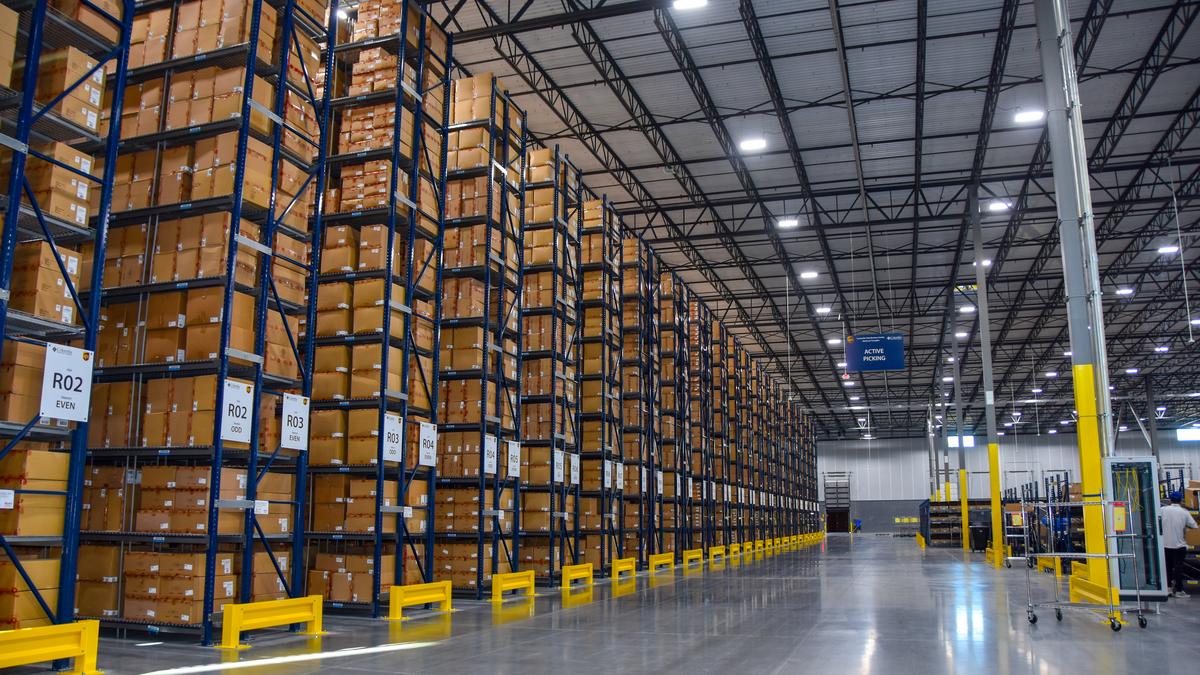
Warehouse racking organization is a method of storing your inventory vertically instead of horizontally, such as on pallet racks. This is a cost-effective way to maximize your warehouse space if you carry a lot of inventory or if you have a small warehouse and can’t afford to buy more space.

3. Use ABC Analysis to set up warehouse inventory

ABC Analysis of inventory is a method of sorting your inventory into three categories according to how well they sell and how much they cost to hold:

  • A-Items – best-selling items that don’t take up all your warehouse space or cost
  • B-Items – mid-range items that sell regularly but may cost more than A-items to hold
  • C-Items – the rest of your inventory that makes up the bulk of your inventory costs while contributing the least to your bottom line

4. Label warehouse inventory

Your employees shouldn’t have to rely on memory when searching for items in your warehouse. Every SKU in your inventory should be clearly labeled for easy identification.

Keep your labeling consistent for every item (i.e., always label the bottom right corner of boxes) and include all the necessary information on every label, such as:

  • Product name
  • SKU
  • Color
  • Size
  • Date

5. Make receiving inventory easy

Receiving inventory effectively is one of the key warehouse management tips because it sets the tone for the rest of your warehouse and inventory processes.

Here are a few ways you can improve inventory receiving:

  • Optimize your receiving space by providing the proper tools and enough space to allow your employees to sort and store incoming inventory.
  • Keep your receiving space clean and organized by removing clutter and putting every tool away after using it.
  • Track inventory in real-time by implementing a perpetual inventory system, in order to reduce miscounts, missing inventory, and incorrect shipments.
  • Monitor quality control by hiring a quality control manager to watch for mistakes, point out problematic procedures, and reduce the instances of inventory damage.
  • Unload received inventory quickly and safely by using the appropriate machines (i.e., forklifts and conveyor belts) and following clear safety procedures.
  • Avoid shipping the wrong items to your customers by verifying the goods received using metrics, such as the description of goods, product code, batch tracking number, etc.

A well-run and well-organized warehouse is a critical function within a company’s sourcing and procurement management efforts. While there is a direct relationship between procurement and supply chain management, the two functions are not interchangeable.

Procurement is the process of getting the goods and materials your company needs, while supply chain management is the process of transforming those goods into products and distributing them to customers as efficiently as possible. Warehouse operations are often where these two practices cross paths, so this pivotal business operation requires the most efficient and well-run systems.

Series Conclusion

It’s easy to become complacent in the way your company does business. If the company is turning a profit, employees are perceived to be happy, and suppliers and clients are limited in their complaints, then why spend the time to self-evaluate and make potentially disruptive changes? Times will change. Industry will change. The world will change. Preparing your company to have the structure in place to withstand economic downturns or extreme cases like global pandemics will allow for a quicker rebound when those crises are over. More importantly, a company’s ability to find ways to improve and evolve, no matter what the global economy indicates, will be a critical measure for your company’s future.

If you would like to download a free white paper from the Corcentric website where all 6 parts of this series of blogs are organized into one single document, please visit our library here.

    As supply chain consultants we help our customers to improve their purchasing processes and find savings opportunities within their supply chain. There are a number of ways to do so, from instituting centralized purchasing tools, guiding purchasing behavior that promotes process efficiencies, and even managing the relationships with the suppliers that our clients choose to use to support their business. One of the quickest routes to savings is the management of indirect spend through Group Purchasing Organizations (GPOs.) 

    Indirect spend is any spend not directly included in the Cost of Goods Sold of a product or service. Indirect spend refers to expenses incurred for materials, services and maintenance required to operate the business. For example, if you own or operate a fleet of vehicles, any money spent on maintaining that fleet would be an indirect spend. Other examples of indirect spend would uniform rentals, industrial supplies or even janitorial services. To help your business Corcentric would holistically analyze all expenditures you’ve made in the past fiscal year. From there we categorize which spend is indirect vs. direct, and then deem which indirect spend categories may be impactable with our help. We look for supplier redundancies, large tail spends, and spend volumes overall. These are all factors that would lead us to look into further details regarding a supplier relationship and discover the room for improvement. 

    One tried and true avenue to create savings is the utilization of Group Purchasing Organizations. GPOs are a quick way to savings because we connect our clients with the suppliers Corcentric has already partnered with and identified as among the best providers in their respective industries. GPOs were a new concept to me upon joining the consulting division here at Corcentric. A GPO is an entity created to combine the purchasing power of a collective of businesses to leverage better pricing and service with desired suppliers. 

    When we think about what that means for our clients, the idea is that we pull together all of customers’ expenditures to qualify for discounts and rebates that they otherwise wouldn’t be able to achieve independently. If we continue to use our example before of being a company that owns a fleet, that fleet will need repairs, fuel and maintenance. If you are a smaller business, you may not have the purchasing power to qualify for rebates from large suppliers. If you were to need new tires, you would be stuck buying them at retail value. However, if you were to join Corcentric’s Michelin GPO, your company’s spend would be combined with all other clients of ours participating in that GPO program and thus would qualify you for better discounts and better service due to that now improved purchasing power. 

    By leveraging pre-negotiated contracts with leading suppliers to source the products your organization uses every day, you benefit from the best possible pricing and service levels. It’s the ideal solution to get everything you need to keep business running smoothly while optimizing control of your indirect spend. We have pre-negotiated GPO deals that you can get immediate access to just by signing up to be a Corcentric customer. Our consulting team knows all the questions to ask and has experience with all the elements of a successful implementation across varying product categories. Corcentric will also act as a managed service for the implementation process, managing the implementation between the customer and supplier. Our goal is to assist with your procurement needs every step of the way.
 
    See the chart below for more on what your company stands to gain by working with Corcentric GPO programs, either as a buyer or supplier. If you feel like your company could benefit from tidying up indirect spend and leveraging GPOs to reduce costs, or becoming a supplier in our network, feel free to reach out to us today to see how we can help your business grow.
 

https://www.corcentric.com/group-purchasing-organizations/indirect-gpo/


Each week, we will go into details on how to address project and change management now to create a resilient and robust organization for tomorrow.

If you missed last week’s blog on Accessing Inventory Management, you can check it out here.

This week, we will look at the 3rd of 6 ways a company can use downtime to impact the greater good of the organization and position themselves to be a better, stronger company when the work picks back up.

Supply Chain Reconfiguration

The supply chain consists of many elements and it is critical that they are working in concert with each other. Strong communication between departments becomes essential to the success of supply chain operation. For example, the procurement and logistics teams must work together to achieve their goals. Typically, procurement’s mandate compels it to pursue the lowest possible price. The logistics function, concerned with the entire supply chain, is evaluating the best possible price, which includes factors beyond the actual price tag, such as end of day pick up time cut-offs, delivery times to top-tier customers, and damage rate. Departmental synergy between procurement and logistics is a must when a company seeks to evaluate their supply chain and reconfigure for optimal operation.

Specific Example: Centralized Versus Decentralized Warehousing Analysis

In the centralized distribution model, operations are typically limited to a “central” location. If there is more than one hub, the locations may be geographically spaced to handle East Coast and West Coast time zones or area-specific product lines.

When a business moves into a decentralized distribution model, the product moves further away from the key stakeholders at the “central” corporate office and closer to the end customer. While this can be accomplished through self-owned warehouse and logistics, a managed decentralized logistics network is far more agile than the alternative. Industries more primed to take advantage of decentralized supply chains are e-commerce, service and repair, pharmaceuticals, medical devices, and just-in-time inventory.

By applying a hybrid model that blends centralized and decentralized supply chain methodologies, a business can enjoy some of the advantages of each while mitigating the negatives. The idea of a hybrid supply chain, although may be an easier sell to a leadership team that favors a centralized or a decentralized logistics solution.

Centralization Positives

  • Fewer locations make the standardization of systems and processes through the business easier. Company culture is easier to foster and maintain in a single location.
  • Management has faster visibility to a product when there is a concern since everything is often located in the same building.

Decentralized Positives

  • Each node of the supply chain can be tuned to that specific area's demand to best serve the customer base. Product levels can be distributed to locations across the country based on the volume of orders in that area.
  • Customers with critical need may have the option of will call or same-day delivery with moderate cost. For example, a customer may be able to order an item and pick it up in the same day.
  • The ability to test systems, products, markets, and suppliers on a small scale before rolling out to the entire organization can lead to better data-driven decisions.

Hybrid Positives

  • Standardization of systems and processes is easier. Company culture can be fostered and maintained in a single location.
  • Leadership has the ability to locate products quickly if there are concerns about inventory status or reliability.
  • The additional locations can be stocked to that specific area's demand in order to better serve customers. Products can be distributed to locations across the US based on the volume of orders.
  • Customers with critical needs may have the option of will call or same-day delivery with moderate cost.
  • The decentralized locations will grant the ability to test systems, products, markets, and suppliers on a small scale before rolling out to the entire organization.
  • Bargaining power with suppliers can be maintained by shipping in bulk to a single location.

Procurement Sidebar

Organizational Recommendations for Procurement

At Corcentric, we strongly recommend that Procurement departments do the following:

1) Align with the strategic goals of the organization

2) Consider the sourcing profiles and nuances for all categories

3) Understand each business unit and stakeholder requirements

4) Provide visibility to the entire organization and share best practices across categories and business units

5) Leverage data analytics and tools to identify, road-map, and execute on actionable sourcing strategies that would maximize value with minimum stress while adequately generating reports

6) Enable organizational culture, in which all sourcing activities are centrally led and reported into but execution and tactical deployments are category driven and left to the sites and business units.

Such steps enable volume consolidation with a healthy supply base balance that supports local or regional concerns. Corcentric defines this approach as center-led procurement. The objective should be to build a center of excellence that entails a much more comprehensive structure, one that leverages the blessings of data management, as much as it does cultural alignment or category management modeling. Center-led procurement maximizes savings without causing disruption. It enables superior supplier relationship management, aligns the businesses to the strategic goals of the organization, and provides key insights and visibility into the organization’s purchasing behavior.

If a company is under the assumption that the only options for warehousing are either centralized or decentralized, they should look deeper into the center-led (see sidebar) or hybrid models. The best center-led procurement organizations concentrate on defining strategy and policy, as well as applying best practices to both direct and indirect procurement. They mostly employ a category management structure that supports the roll-out of their directives to business unit and regional levels. Hybrid models adopt a pick-and-choose approach to procurement, with a central leadership structure supported by local managers with some degree of autonomy. The most effective center-led systems maximize communication along the organizational chart to ensure core standards are maintained and aggressively take advantage of technology to facilitate those goals. An organization must be prepared to take action if change is the best option. If it is determined the center-led model works best, it is incumbent on Procurement to gain the necessary buy-in and resources to make the change.

Please check back next week for a look at part 4 of this series where we will discuss ‘Introducing Automation’.


Each week, we will go into details on how to address project and change management now to create a resilient and robust organization for tomorrow.

Recent months have clearly demonstrated that business is always vulnerable to forces that are often outside of their control. But it does not mean they do not have control to prepare for such events. This blog series will address key projects and initiatives that procurement organizations can take on to improve internal operational and organizational processes and procedures. The first point to consider is how much value an internal project brings to a company, If all of an employee’s time is considered overhead and they never work on any client or customer-facing initiatives, it becomes much more difficult to determine the return on that investment. Every organization understands the importance of having such people on staff. IT, HR, and Accounting are typical departments where the time dedicated to the job is nearly 100 percent internal focused.

On the other side of the spectrum are the employees who directly work with or for clients or customers. Whether in sales, manufacturing, or engineering, most of the time spent by those team members is focused on products and services directly tied to a client or a customer. If an employee’s time can be attributed to a product, service, or a specific job, then it becomes easier to determine profitability and the success of those work streams.

So what happens when there is a temporary situation where those employees no longer have sustainable work coming in? What happens when there is a lack of product getting sold, no new clients coming in, the economy is in a tailspin, or there is a global pandemic nearly shutting down the entire global supply chain?

Companies should always have a strategy in place to navigate unexpected economic fluctuations due to industry uncertainty, national policies, or global calamities. When a crisis strikes, leadership can then pivot to those internal projects that are very important to a company’s overall efficiencies and ultimate successes but often get left on the back-burner due to the more immediate needs of clients and customers. The ability to reapportion project downtime by tackling those internal tasks or procedures that are often overlooked could be the key to a company’s survival when the work begins to pick back up.

A strong change management process is key for any organization to navigate corporate evolutions that arise – both planned and unforeseen. Change management provides the processes, tools, and techniques that guide leadership and employees through shifts in responsibility, while also fostering the productivity the organization requires to achieve business outcomes. When the organization needs to adjust how work will be done, change management focuses on how to help employees embrace, adopt, and utilize changes in their day-to-day work.

This week, we will look at the 1st of 6 ways a company can use downtime to impact the greater good of the organization and position themselves to be a better, stronger company when the work picks back up.

Cultivate Supplier Relationships

A critical component to any company’s success is its ability to maintain strong working relationships with suppliers and vendors. This may sound like an obvious statement but, oftentimes, both sides of the partnership become complacent in their processes. While everything appears to be fine (if it’s not broke, don’t fix it), opportunities to improve the relationship can be overlooked. Examples include streamlining processes or procedures and adjusting costing models that could ultimately save money. Those responsible for managing the relationships with suppliers should always be looking to challenge the status quo.

Specific Example: Engage in Process Mapping with Key Suppliers

Engaging a key supplier in a process mapping effort can be a very powerful method for improving business performance and increasing the valuable contribution of that key supplier. Process Mapping is the technique of using flowcharts to illustrate the flow of a process, proceeding from the most macro perspective to the level of detail required to identify opportunities for improvement. Process maps can be applied to anything from the journey of an invoice or the flow of materials, to the steps in making a sale or servicing a product. Mapping helps address questions related to individual and team performance, quality of work life, and work design.

As the trend toward outsourcing continues to grow, treating key suppliers as business partners becomes far more important to a successful enterprise value proposition. Top suppliers want to come to the table with a “help me help you” partnership philosophy.

Once a company has created a process map for all suppliers in a specific category, it becomes easier to see where supplier redundancy occurs and where there are opportunities for supplier consolidation. Companies should also use this exercise to identify the strengths and weaknesses of their suppliers and determine if the correct relationships are in place. Just because a supplier can do something, does not mean they should do it. Conversely, you might have suppliers capable of doing great things for the company that you may not have been aware of. Process mapping will help to identify those potential services or offerings. The goal is to make sure you have the right suppliers in place performing the services they excel at.

Example Tool for Process Mapping

SIPOC (A Six Sigma Tool)

Please check back next week for a look at part 2 of this series where we will discuss ‘Accessing Inventory Management’.


Covid-19 has had many impacts on businesses and people and some of these impacts may become the new normal.  As stay at home orders were mandated and retail stores were forced to close, e-commerce saw exponential growth.  Although many companies over the years have implemented e-commerce into their operations, the shift from brick-and-mortar to e-commerce is expected to increase.  This shift to e-commerce will drive the demand of warehouse space.

An increase in investment in warehouse space is projected to occur as e-commerce retailers grow.  MasterCard stated that e-commerce spending grew 93% year over year this May.   According to a new report from Prologis, e-commerce requires three times the logistics space of traditional storefronts.  The reason for this is because 100% of the retailers' inventory is now in a warehouse, rather than spaced out between a warehouse and stores.  Also, online retailers tend to have a larger array of products in their inventory, thus increasing their storage needs. 

Due to the rising demand of warehouse space, DB Schenker, a global leader in supply chain management and logistics solutions is providing a new service.  This new service screens almost 9 million square meters of storage space daily.  It identifies and assesses available idle space in their almost 800 logistic warehouses in more than 60 countries.  Areas that are typically used for dedicated customers are being transformed into temporary storage areas for companies that urgently need additional capacity.  With Covid-19, industries such as food and healthcare are experiencing out of the ordinary demand rates, thus affecting their production levels and storage abilities.  Although this service was reactive to Covid-19, the ability and use of storage scanners will continue in the future, as the need for warehouses increase.

Warehouses have recently been and will continue to be in high demand.  The expansion of e-commerce and the shift from brick-and-mortar to e-commerce due to Covid-19 has drastically impacted the need for storage space.  The demand for warehouses will continue to rise.

The current state of the global economy has caused a very large amount of companies around the world to either change how they operate or perhaps even stop operations all together. The
consequences of doing so are very significant and while companies try and figure out ways to keep their head above water, some might look at this time as a way to dive into some projects that have always been on the back-burner and could help your organization come out of the global pandemic quicker than others.

Identifying opportunities within a supply chain to reduce your overall spend as a company is a critical area of focus. Some opportunities are easier than others. Some require a lot of internal effort in order to gather the required data and perform the necessary analytics to make educated decisions. During the COVID-19 pandemic, this could be a great time to utilize the time available to collect that data and do those analyses.

One area where a company can look to reduce their overall spend is with Inbound Freight. Specifically, freight where the cost is currently built into an invoice with a supplier. An invoice might have a fixed fee for the product coming in, perhaps they charge a percent of the invoice for freight, or maybe they have their own preferred carrier network and just select the carrier they like the most. Are any of those methods the best option for you? Understanding how you are charged for inbound freight can be a huge opportunity for improvement. By taking control of the spend, you can start to find ways to improve on the cost to ship those goods. It might take a little more manual effort from your logistics team but in the end, the ability to control all of the cost levers and flexibility to change as needed, can be a great opportunity for savings.

There are a couple of things to consider when determining what the best option is for inbound freight with your suppliers.

Flat Fee: Ask your supplier for details on the shipment. As for dimensions, weight, shipping method, class, etc. Reach out to one of your carriers (parcel, LTL, FTL, etc) and ask them to price out a shipment with those specifications. Try and determine if that shipment is one of the more common shipments. Do you receive that shipment 80% of the time? When you get pricing back from your carrier, see if it is above or below your flat fee to determine if there is an opportunity to take that cost in house and use your own carrier network.

Percent of Invoice: The type of commodity is important here. If you are receiving very expensive items but a carrier values those items as ideal freight to carry (well boxed, palletized, dense, etc), then you might want to have your carrier move that freight instead of take the hit on the invoice.

Supplier’s Carrier: It easy to assume a supplier will always use the best carrier for you. That does not have to be the case. They are most likely using a top carrier in their network, not the one with the lowest cost, or best transit time or most reliable delivery. Determine which of these factors matter the most to you and either ask the supplier to select carriers bases on your requirements, or use the same method as Flat Fee and ask for a variety of shipment specs, and ask your carriers to price accordingly.

3PL: One other option could be with a 3PL or the Spot Market. If you do not want to use contracted pricing for receiving a shipment, maybe the market is in a downturn for trucking, use a 3PL or hit the spot market. Using these options when the time is right can help save a lot of money throughout the year.

Taking on an initiative like this will require a lot of time and effort. Multiple departments throughout your organization will have to get involved. The cost function of the invoice changes if freight is removed. It’s no longer baked into the cost of the goods. This could change how you price your products or services for your customers down the road. Making sure the proper internal stakeholders are involved will be critical for not only the success of the project, but making sure your company will be able to take advantage of all the operational and cost improvements made as a result of taking control of your inbound freight.

What are some other downtime projects where Corcentric can help? Please visit our website and fill out our online form here.


Logistics Series – Blog 6 – Marine Fuel Regulations? Brexit? Coronavirus? The Global Economy and Supply Chain Keeps Taking Hits

Back in June of 2019, we posted a blog title “Global Economy Vs Transportation Industry” and it
focused on how a variety of global and domestic events can truly test how prepared one’s supply chain is when faced with new sets of obstacles and hurdles. From recessions to driver shortages and from tariffs to the holiday season, some changes or disruptions to the global economy are very predictable while others are quite sudden and highly impactful.

Previously, I have stated, “Shippers must also be prepared for the unexpected shift in supply chain patterns. There could be an influx of a particular product entering the system or there could be cases where the opposite is true. Something as simple as bad weather can cause common spring and summer goods to be sitting on the shelves instead of in the back of a truck.” I then went even further and stated “When extreme weather conditions threaten the US, there are several short and long term planning options to consider. Shippers can move freight out of a region early if something like a hurricane is imminent. In other cases, like an earthquake, time is not something a company has so moving freight ahead of time is not possible. Companies can have a list of back up suppliers and vendors so if critical items needed for production cannot be shipped from a particular region, a backup is in place from a totally different region.”

Those comments focused around severe and extreme weather events. There was no mention of a global pandemic. Or a change in regulations on marine fuel. Or what would happen if England decided to leave the European Union. All of which have happened within the first two and half month of 2020.

With all that said, all of these major body-blows to the global economy and supply chain relate in a way that is very important when trying to develop and maintain a well-run logistics network with limited disruptions and optimal pricing. Timing is critical.

Even the most prepared shipper with the most well-thought-out network with dialed in pricing models can’t be prepared for everything that has happened so far in 2020. I completely agree in measures companies take to help mitigate potential disruptions or price hikes. Some of those measures include diversifying your supplier base, becoming a shipper of choice (Logistics Series – Blog 5 – The Art of Becoming a ‘Shipper of Choice’), and using planning models to become predictable and reliable in your process.

Price increases are part of the game. We would all like to be able to reduce cost year over year but the key to doing so is knowing when to strike (run a RFP) or when to accept a negotiated, fair, market appropriate increase. Often the most important goal to a shipper is to limit the disruptions to the supply chain. Understanding when to take a hard stance and expertly negotiate cost decreases or possibly even switch vendors for even greater savings is very dependent on the state of the industry and the global supply chain. It is possible, that doing nothing, could be the best option.

One final piece to this blog, here are a few bullet points on the three main supply chain pains of 2020:

IMO 2020 – Marine Fuel Regulations:
  • IMO banned ships from using furls with a sulfur content greater than 0.5%
    • Previously was 3.5%
  • Regulation aimed at improving human health by reducing air pollution
  • New regulation causes shipping lines to incur additional costs
    • Some carriers have already invested as much as $2 billion/year in this area
  • Ocean shipping is predicted to see price increases throughout 2020 to offset the increased cost of fuel
  • Due to IMO 2020, cost of marine fuel doubled
    • 1/3/2019 3.5% heavy fuel oil (HFO) was $363/ton
    • 1/3/2020 VLSFO was $724/ton
  • The changes in fuel prices and the implementation of surcharges means shippers may require a different approach to their annual contract negotiations
Brexit:
  • Short term effects will be time, partial trade contraction
  • Long term effects will be structural changes with adjustments in logistics and value-added chains therefore the location of productions and partial reorientation of trade flows is more than certain
    • Also long term: allocation of resources, reallocation of production, and resulting impact on economic growth Reduced trade
  • Almost half of UK's exports distributed to countries within EU
  • After Brexit this number will decrease and over time will hurt UK's GDP
  • Reduced trade across Europe's mainland leads to a decline in demand for road haulage (regardless if rate of export remains unchanged)
  • Stricter border control
    • Increase in barriers at borders for administration of trade in both directions
    • Decreases efficiency
    • Goods transported slower
Coronavirus (Chinese Exports):
  • Wuhan which is a manufacturing hub is on lock-down
  • Industries impacted by shutdown
    • High-tech industry
  • Foxconn is a critical manufacturer in high tech supply chains
  • Other active contract manufacturers for high tech products are located in regions with similar restrictions as Wuhan
  • Hard to easily transfer/start up high tech production facility due to its high costs therefore causing the options in the short term to be significantly reduced
  • Wuhan heavily supports/impacts automotive industry
  • Robert Bosch GmbH (one of the largest auto parts makers in the world) closed 2 of its plants near Wuhan
  • Hyundai in Korea announced they ran out of Chinese parts for their just in time inventory process
  • US and European car manufacturers estimate they are 3-4 away from running out of their Chinese supplies
  • Due to China being the largest exporter of intermediate products, its closures are severely disrupting global supply chains
  • Even if secondary suppliers were to be utilized, the surge in demand will overwhelm them
  • Many supply chains are vulnerable because supply chains within supply chains and even their supply chains rely on each other for parts and raw materials
  • Hyundai had to suspend operating at a manufacturing plant in Korea due to its inability to receive parts from China
    • Hyundai is one of the first to announce its interruption in manufacturing
  • Probably won't be the last though
  • Airlines and air cargo were first on a restricted holiday schedule but now are suspended
  • Many factories and logistics warehouses are on extended leave, not just in Wuhan but in other large Chinese cities
  • For the factories that are not being forced to shut down, people are scared to go back to work
  • Some companies are trying to source parts to stock up on inventory but this will cause various shortages therefore increasing premium pricing strategies and part hoarding
  • Should products be exported from China, there would be extensive screening for the virus at seaports, airports, and other China border crossing thus causing severe delays
Coronavirus (US Imports):
  • In just 4 weeks, the concern went from the Chinese Export market into the US to a mass manufacturing stoppage where the goods unable to come into the importing country is becoming less and less critical
  • This will get worse before it gets better
  • Stay Safe Everyone